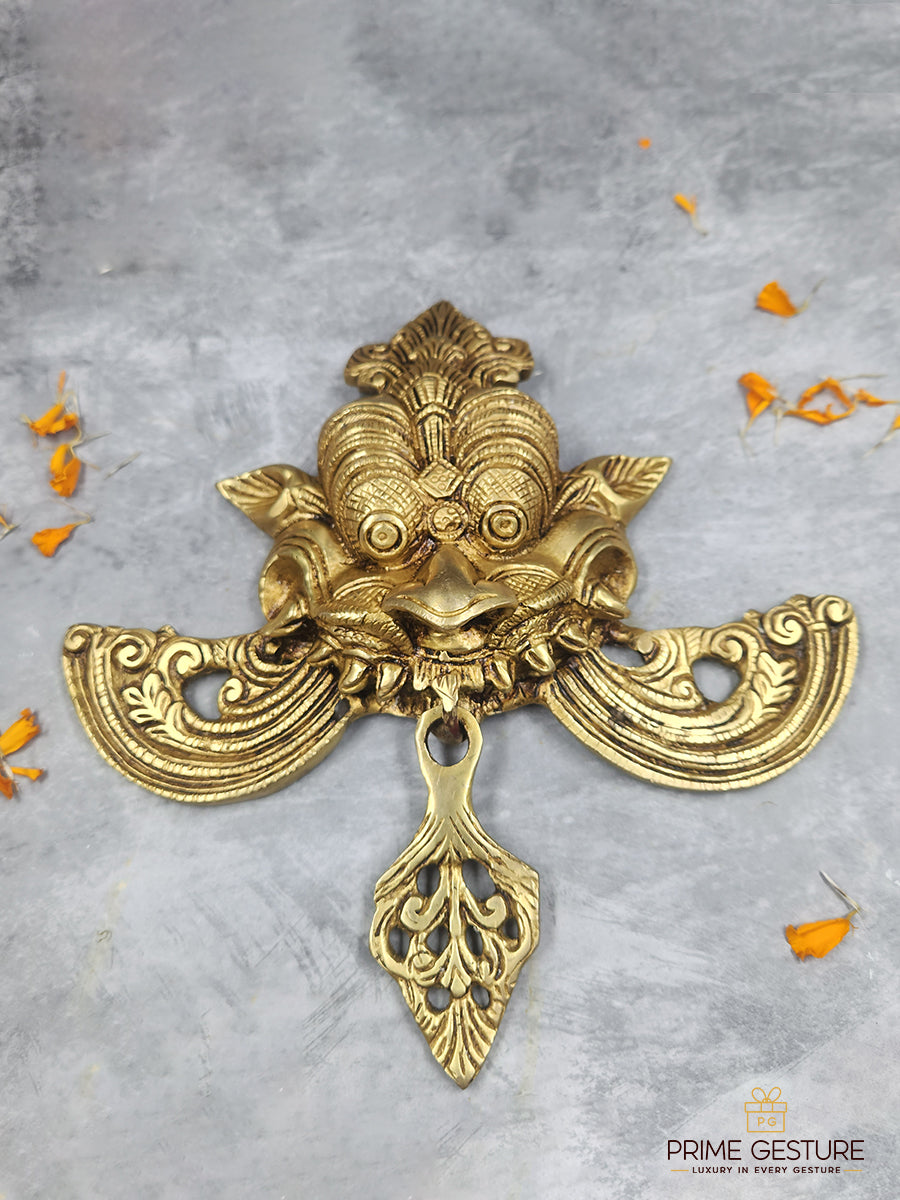
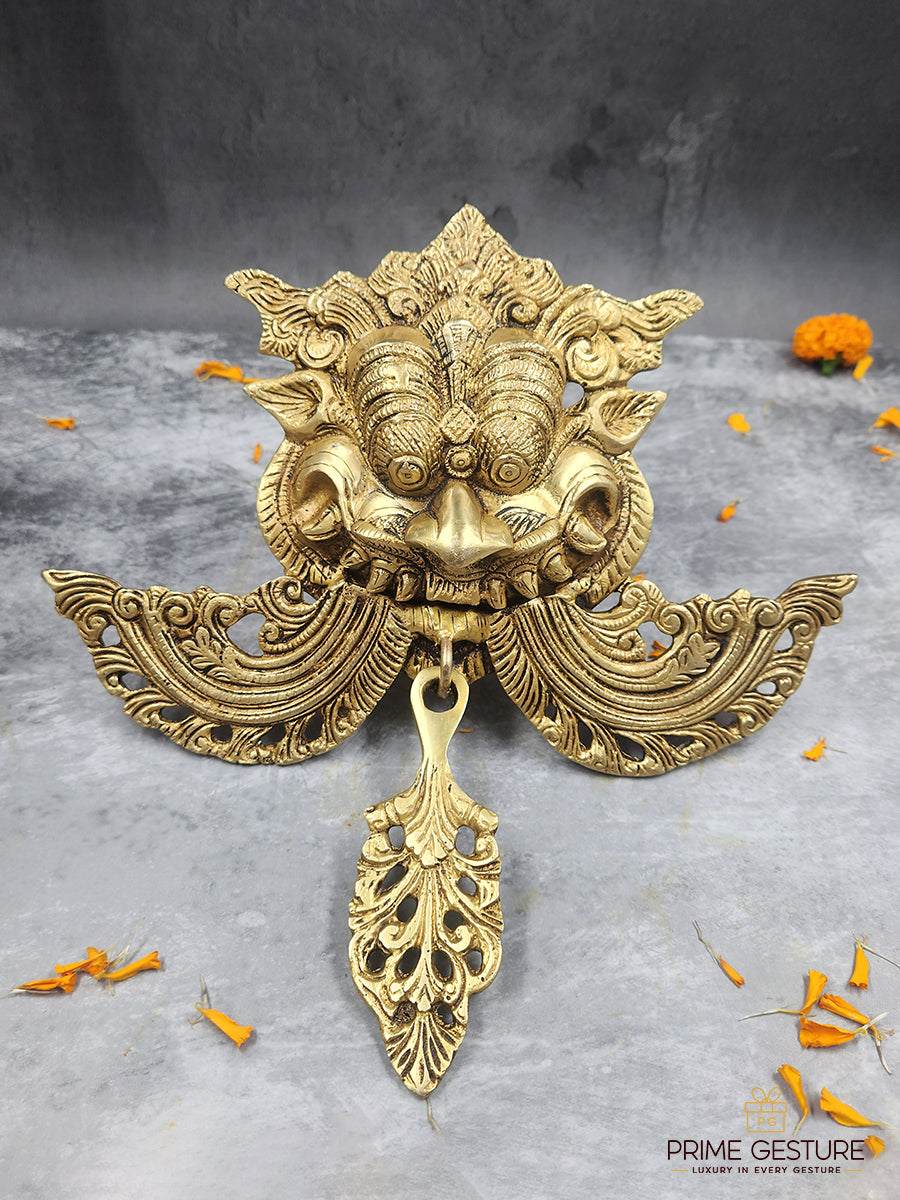
Brass Nazar Battu for Home — Handcrafted Yaali Evil Eye Protection
A brass nazar battu is one of the oldest and most trusted forms of evil eye protection in Indian tradition. At Prime Gesture, our nazar battu wall hanging pieces are handcrafted with the sacred Yaali — a mythological creature known for guarding doorways and warding off negative energy. Placed at the main entrance of your home, office, or temple, a yaali nazar battu acts as a silent guardian against buri nazar and unwanted vibrations.
Each piece in our collection is designed as more than an evil eye for home decor — it is a negative energy remover for home built with purpose. Explore our brass door hanging for home range below, and bring home a nazar suraksha kavach that carries both cultural meaning and timeless craftsmanship.
Why a Nazar Battu Belongs at Every Indian Home Entrance
In Indian culture, the main door of a home is believed to be where energy enters — both good and bad. A nazar battu for home entrance is the traditional remedy that families have trusted for centuries to filter out envy, jealousy, and unwanted glances. When someone admires your new home, your growing business, or your children with the wrong intention, that gaze carries what elders call buri nazar. A well-placed evil eye for home protection absorbs it before it reaches anyone inside.
The yaali is a fierce mythological symbol carved on temple entrances across South India — part lion, part elephant, part mythical guardian. Our handcrafted yaali nazar battu brings that same temple-level protection to modern Indian homes. If you are looking for vastu items for main door that combine craftsmanship with spiritual purpose, this is where to start.
The Yaali and the Kirtimukha: Two Guardians, One Purpose
A lot of first-time buyers ask us about the difference between a yaali and a kirtimukha. Both are ancient protective symbols carved on temple doors and often paired together in Indian architecture. The yaali is the fierce guardian creature — lion-bodied with an elephant's trunk in most traditional forms. The kirtimukha is the "face of glory," a fierce demon face designed to swallow negativity before it enters a sacred space.
Our kirtimukha brass wall hanging and yaali designs can be placed together or used independently, depending on your preference. Both serve as an evil eye charm for house entrances and are especially effective when hung directly above or on the main door.
Brass: The Metal That Amplifies Protection
Brass is considered one of the most auspicious metals in Indian tradition because of its connection to the sun and its ability to carry protective vibrations. A brass nazar battu does not just look beautiful — it is believed to actively strengthen the shield it creates around your home. Unlike plastic or painted nazar battu alternatives, solid brass develops a warm antique patina over time and never loses its structural strength.
Every brass door hanging for home in our collection is cast using traditional sand-mould techniques, hand-finished by skilled artisans, and polished to an antique golden tone that matches wooden doors, marble entrances, and modern interiors equally well.
Nazar Battu vs Nimbu Mirchi: Why a Permanent Solution Makes Sense
Many Indian families still use the traditional nimbu mirchi (lemon and chilli) hanging at their doorway. It works — but it has to be replaced every 7 to 14 days, and the dried version does not protect as strongly as the fresh one. A brass yaali nazar battu is a nimbu mirchi alternative that offers continuous, permanent protection without daily upkeep.
This is why more families are moving to a metal evil eye door hanging as their primary protection, and keeping nimbu mirchi as an additional layer for special occasions or during difficult periods.
How to Place Your Nazar Battu for Maximum Effect
Where you hang the piece matters as much as what you hang. Follow these simple guidelines for correct placement:
- Hang the yaali nazar battu directly above or on the outer side of your main door, facing outward so it sees anyone approaching.
- The ideal height is just above eye level — between 6 and 7 feet from the ground — so it meets the gaze of arriving visitors first.
- Never place a nazar battu inside a room, in a bathroom, or in a storage area. It is meant to guard entry points only.
- Clean the piece with a soft dry cloth once a month. Do not use water or harsh cleaners on the antique finish.
- For offices and shops, hang it at the main entrance or the reception area where customers first enter.
Popular Uses for Our Brass Yaali Nazar Battu Collection
A brass nazar battu fits more occasions than most buyers realise. Our customers use these pieces for:
- Permanent protection at the main door of a new or existing home
- Housewarming gifts as auspicious good luck symbols for home
- Office and shop entrances where evil eye protection matters for business growth
- Home entrance decor india that combines tradition with modern aesthetics
- Gifting for Griha Pravesh, Diwali, and new-venture openings
- Temple entrances and pooja room doorways as a traditional guardian symbol
Drishti Bommai and Regional Variants
Across India, the same protective tradition takes different forms. In Tamil Nadu, the drishti bommai — a small painted face hung at doorways — serves the same purpose as a North Indian nazar battu. In Kerala, carved wooden masks do the work. Our brass yaali nazar battu is the pan-Indian metal version of this protective tradition, designed to complement any home style from Chennai to Chandigarh.
Why Buy a Brass Nazar Battu From Prime Gesture
- Handcrafted by skilled artisans — Every piece is shaped and finished by hand, not machine-moulded, giving each nazar suraksha kavach its own unique detailing.
- Premium brass quality — Solid brass construction with authentic antique finish that lasts decades without losing its protective symbolism.
- Traditional designs with modern appeal — Our yaali and kirtimukha designs work equally well with wooden doors, modern interiors, and classic Indian architecture.
- Safe packaging and fast delivery — Every piece arrives damage-free with reinforced packaging, shipped across India.
- Trusted by thousands of Indian families — Our brass home protection items are chosen by devotees, vastu consultants, and home decor buyers alike.
Explore Related Collections
For buyers setting up a fully protected and auspicious home, we recommend pairing a brass nazar battu with other traditional pieces from our catalogue: