Brass Ram Ji
-
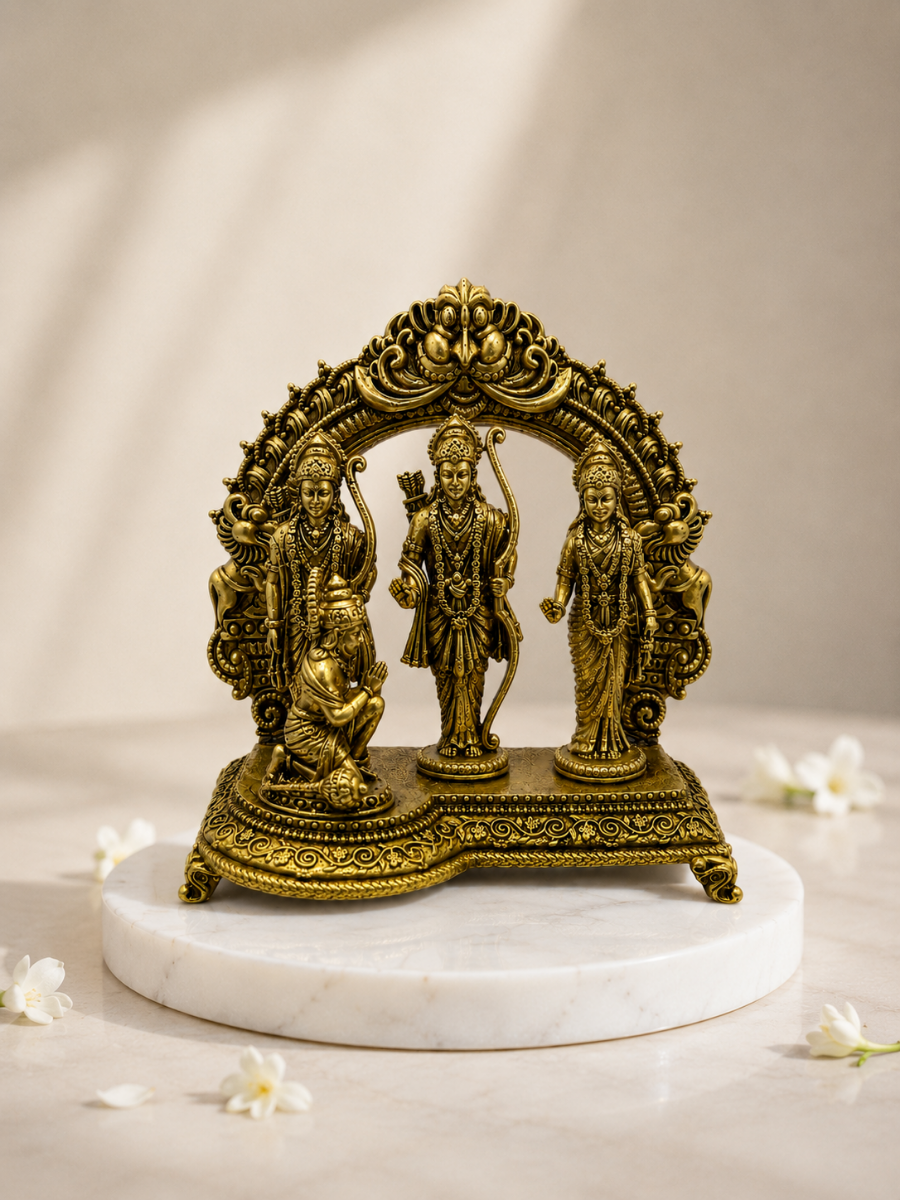
Ram Darbar Antique Gold Finish Idol with Hanuman for Home Temple
0.256 kg
Shop NowRegular price Rs. 2,499.00Regular priceRs. 4,999.00Sale price Rs. 2,499.00 50% offSale -
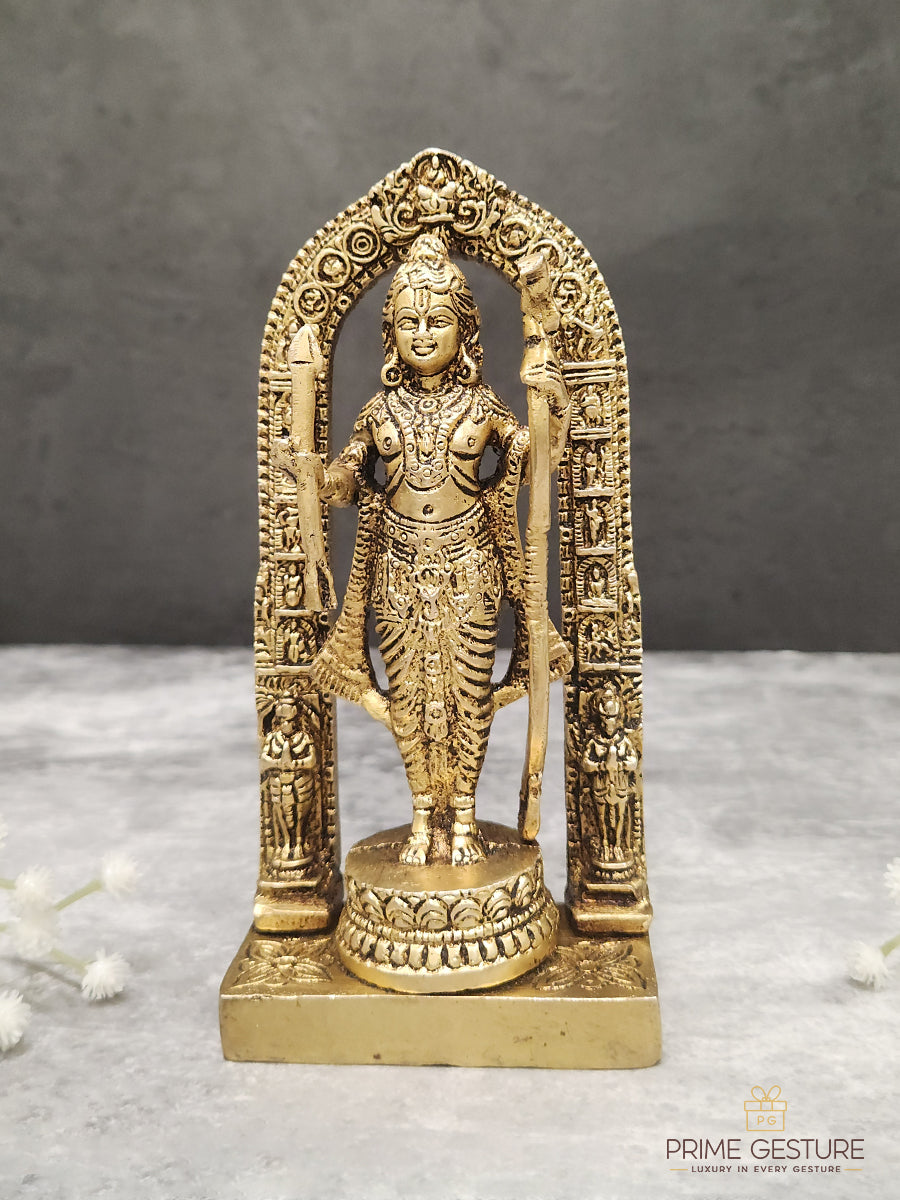
Divine Brass Shree Ram Lalla Idol
0.664 kg
Shop NowRegular price Rs. 2,000.00Regular priceRs. 4,000.00Sale price Rs. 2,000.00 50% offSale
Brass Ram Ji Idol for Home Temple — Ram Darbar and Ram Lalla Collection
A brass Ram Ji idol is the centrepiece of any Vaishnava home altar. Lord Ram — Maryada Purushottam, the ideal man, the eighth avatar of Vishnu — is worshipped across India as the embodiment of dharma, duty, and righteous strength. At Prime Gesture, this collection holds two forms: the Ram Darbar antique gold finish idol with Hanuman, Sita, and Lakshman, and the brass Ram Lalla murti inspired by the consecrated child form at Ayodhya. Both are handcrafted in 100% pure, magnet-tested brass and finished by hand for daily home puja and meaningful gifting.
Browse the brass Ram Ji idol collection below and choose the form that suits your altar, your devotion, and the occasion you are marking.
Brass Ram Ji Idol for Home Temple — Handcrafted Brass Ram Darbar and Ram Lalla Murti
Lord Ram is the Vishnu avatar that most directly embodies the human ideal. Where Krishna represents divine joy and Shiva represents the cosmic force of transformation, Ram represents something more intimate and more demanding: the righteous person who keeps his word, honours every relationship, and chooses duty over comfort — even when the cost is immense. A brass Ram Ji idol on a home altar is not merely a devotional object. It is a daily statement about what the household aspires to become.
Who Is Lord Ram? Maryada Purushottam in Brass
The Valmiki Ramayana — one of the two foundational epics of Indian civilisation — describes Ram as Maryada Purushottam: the highest among all who keep the boundaries of dharma. Born to King Dasharatha and Queen Kaushalya in Ayodhya, Ram spent fourteen years in forest exile after being displaced from his rightful throne. He crossed the ocean to Lanka to rescue Sita. He fought and defeated Ravana. And through every trial, his conduct remained exactly what a king, a son, a husband, and a warrior is supposed to be — nothing more, nothing less.
The Ramcharitmanas of Tulsidas — written in the 16th century in Awadhi and memorised by millions across North India — describes Ram's return to Ayodhya on Diwali as the moment when right order was restored to the world. This is why a brass Ram statue has been placed in Indian homes for centuries: not simply as an act of worship, but as an act of alignment with the values Ram embodies.
The Two Forms
This collection holds two distinct brass Ram Ji idols, each suited to a different devotional relationship and altar context.
The Ram Darbar Antique Gold Finish Idol with Hanuman shows the complete royal court: Lord Ram and Sita on the throne, Lakshman standing in protective attendance, and Hanuman kneeling in devotion before his lord. This is the Ram Darbar — the divine court that Tulsidas describes as the most joyful scene in the Ramayana, the moment of coronation when every relationship was in its right place. The antique gold finish deepens with daily worship and suits both traditional pooja rooms and modern altars equally. The Ram Darbar brass murti is the correct form for households that worship Ram as their primary deity with a daily puja practice.
The Brass Shree Ram Lalla Idol shows the child form of Ram — the infant or young child Raja Ram — in the iconographic tradition that gained national attention after the 2024 consecration of the new Ayodhya temple. The Ram Lalla brass idol is for devotees who connect with Ram in his most innocent and accessible form, for families with young children who want the child-Ram's presence on their altar, and for anyone who wishes to honour the significance of Ayodhya in their own home.
Why Choose Antique Gold Finish for a Brass Ram Statue
The antique gold finish applied to Prime Gesture's brass Ram idol is not a plating or coating. It is a surface treatment on solid brass that darkens the carved recesses — the lines of Ram's crown, Sita's ornaments, Hanuman's posture, Lakshman's bow — while leaving the raised surfaces their natural golden tone. The result is a lord ram murti where every carved detail reads clearly from the distance of a home altar.
The finish develops further character with daily worship. The warmth of incense smoke, the regular dry-cloth wipe, the years of diya light — all deepen the antique tone in a way that is considered auspicious in the Indian brass tradition. A Ram Ji idol bought today and worshipped sincerely for twenty years becomes a piece that carries the energy of that devotion visibly.
Ram Ji Puja — Daily Practice at the Home Altar
A daily Ram Ji puja takes under ten minutes and requires five elements: a lit ghee diya, fresh tulsi leaves, yellow flowers, a small sweet offering, and a recitation. Tulsi is non-negotiable for any Vishnu-avatar worship — it is Ram's primary sacred plant, and fresh tulsi at the idol's feet each morning is the simplest and most complete daily offering. Yellow marigold or champa are Ram's preferred flowers.
Recite Om Sri Ramaya Namaha — the twelve-syllable Ram mantra — as the primary invocation. On Ekadashi, Vishnu-tradition puja deepens. Ram Navami — the festival of Ram's birth, falling in the Chaitra month — is the most auspicious annual occasion for Ram Ji puja and for installing a new brass Ram idol on the home altar.
Where to Place a Brass Ram Ji Idol for Home
Place the brass Ram Ji idol on the East or North-East wall of the pooja room, with the idol facing West so the devotee faces East during puja. East is the direction of the rising sun — of new beginnings and the energy that Ram's story is ultimately about: the restoration of right order after a long trial.
The idol belongs on a clean, raised platform — a brass chowki or a dedicated wooden mandir shelf — never directly on the floor. Keep the altar area clean and change the tulsi offering and flowers daily. If the Ram Darbar idol with Hanuman is your primary deity, give it the central, most prominent position on the altar.
Brass Ram Ji Idol as a Gifting Piece
A brass Ram statue is among the most enduring gifts in the Indian tradition because it carries no ambiguity about what it represents. The recipient does not need to be told why they are receiving it or what it means. Ram's values — dharma, loyalty, courage under trial, protection of those in one's care — are universally understood. The gift arrives complete.
The Ram Darbar brass murti is specifically strong for housewarmings, where the complete court blessing of Ram, Sita, Lakshman, and Hanuman sets the tone for the new home. The Ram Lalla idol is particularly appropriate for Ayodhya-connected gifts, for Ram Navami, and for families who want the child-Ram's presence on their altar alongside the adult Darbar form.
Why Buy Your Brass Ram Ji Idol From Prime Gesture
- Handcrafted pure brass: Every piece cast and finished by skilled artisans — not machine-stamped or hollow.
- Magnet-tested authenticity: 100% pure brass certified at Prime Gesture. No mixed alloys or plating.
- Antique gold finish: Applied by hand, deepens naturally over years of daily worship.
- Free pan-India shipping: Reinforced packaging, cash on delivery, and easy returns on every order.
Explore Related Collections
Complete your Ram-tradition altar with these companion pieces from Prime Gesture:
- Lord Hanuman — the natural companion for any Ram puja altar
- God Idols — full range of brass deity idols for home temples
- Vishnu Balaji — Ram's Vishnu-avatar tradition continued in the Balaji form
- Brass Collection — all handcrafted pure brass idols and puja accessories
- Idols for Protection — protective deity idols for the home altar
Frequently Asked Questions
What is a brass Ram Ji idol?
A brass Ram Ji idol is a handcrafted solid brass murti of Lord Ram — Maryada Purushottam, the eighth avatar of Vishnu — used for daily home puja. The two forms in this collection are the Ram Darbar idol (Ram, Sita, Lakshman, and Hanuman together) and the Ram Lalla idol (the child form from the Ayodhya tradition).
What is the difference between a Ram Darbar idol and a Ram Lalla idol?
The Ram Darbar brass murti shows the complete royal court: Ram and Sita on the throne, Lakshman in attendance, and Hanuman kneeling — for households with a daily Ram puja practice. The Ram Lalla idol shows the child form of Ram in the Ayodhya iconographic tradition, suited for families, children's altars, and Ayodhya-connected devotion.
Where should a brass Ram Ji idol be placed at home?
Place the ram ji idol for home on the East or North-East wall of the pooja room, with the idol facing West. Keep it on a clean raised platform — a brass chowki or wooden mandir shelf. Offer fresh tulsi and yellow flowers daily. Avoid the bedroom, bathroom, and kitchen.
What should be offered to a Ram Ji idol?
Fresh tulsi leaves are the primary offering for any Ram puja — as a Vishnu avatar, tulsi is Ram's sacred plant. Also offer yellow flowers, a ghee diya, incense, and a sweet as bhog. Recite Om Sri Ramaya Namaha daily. Ram Navami (Chaitra month, March-April) is the most auspicious annual occasion.
Is a brass Ram Ji idol a good Diwali gift?
Yes. Diwali commemorates Ram's return to Ayodhya after fourteen years of exile — the most iconographically appropriate occasion for a lord ram murti gift. The brass ram darbar murti is particularly strong for Diwali as it shows the complete coronation scene that Diwali itself celebrates.
Why choose solid brass over resin or other materials for a Ram idol?
Solid brass holds the energy of daily puja over years and develops a natural patina that deepens the idol's presence over time. Unlike resin or ceramic, a brass Ram statue does not chip, fade, or lose its carved detail with age. A brass Ram Ji idol bought today can be passed to the next generation.