
BRASS POOJA BELLS
-
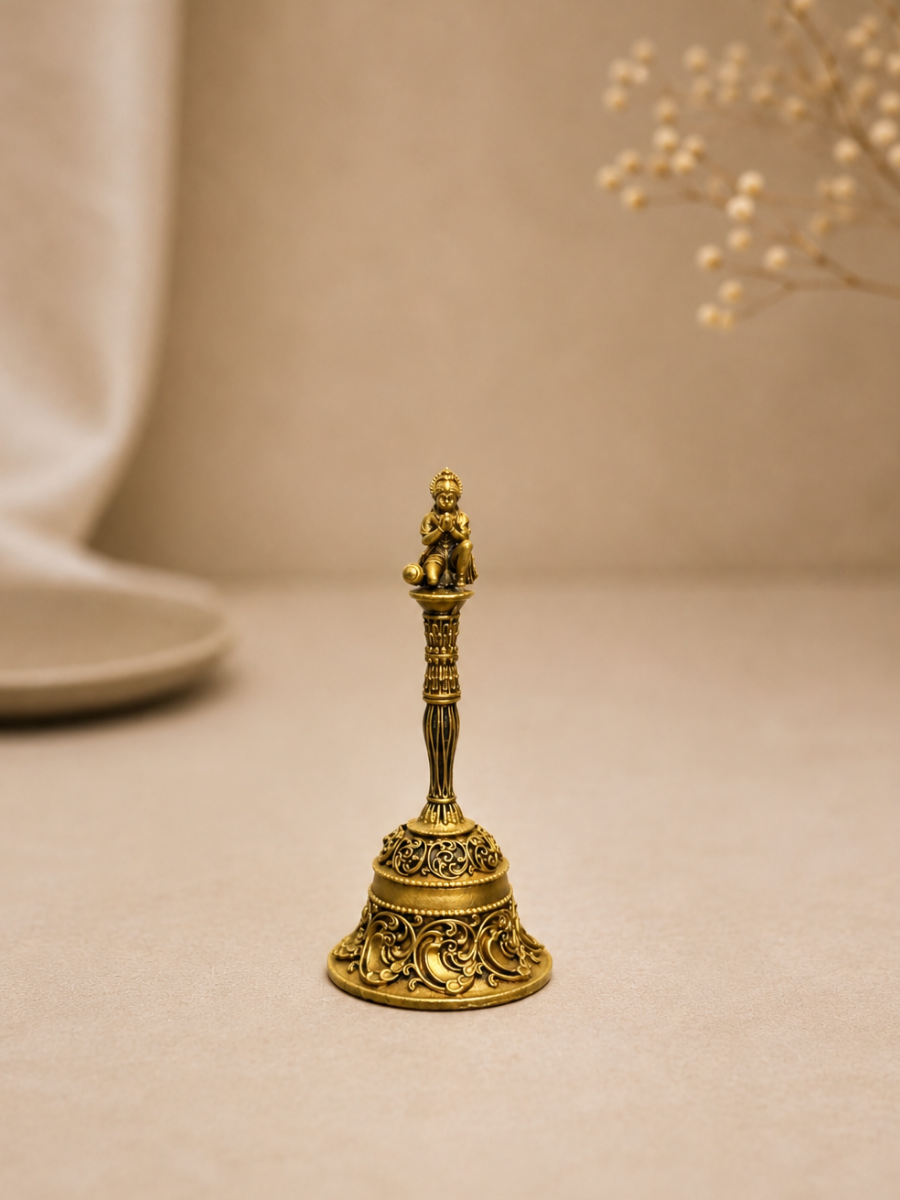
Hanuman Decorative Pooja Bell Antique Gold Finish for Temple Decor
0.112 kg
4.8 (20 reviews)Shop NowRegular price Rs. 1,499.00Regular priceRs. 2,999.00Sale price Rs. 1,499.00 50% offSale
Brass Pooja Bells — Temple Bells and Ghanti for the Home Temple
A brass pooja bell is rung at the start of worship and during aarti to invite the deity's presence and clear the air of negativity. Prime Gesture's pooja bells are hand-cast by skilled artisans, tuned for a clear, resonant sound, and finished in a warm antique tone. Each bell is made for the home temple, daily pooja, and gifting, and is built to last for generations.
This collection holds brass pooja bells in both hand-held and hanging forms, from a small hand bell for pooja to a temple bell for home doorways and mandirs. Every bell is solid brass, not plated or hollow, and develops a richer antique patina the longer it is kept. Browse the collection below, or shop pooja bell online and filter by size and price to find the right ghanti for your worship.
Why Is the Bell Rung During Pooja?
The bell, or ghanti, holds deep meaning in Hindu worship. Its sound is believed to invite the deity's presence, drive away negative energy, and mark the sacred moments of the pooja. The ringing is traditionally sounded at the start of worship, during aarti, and while offering food to the deity.
The sound of a well-made brass bell is said to carry the vibration of Om, the primordial sound. This is why the temple bell sound of brass matters so much, a clear, sustained ring is considered more auspicious than a dull or short one. A quality brass pooja bell produces exactly this kind of resonant, lingering sound.
What Makes a Brass Pooja Bell the Right Choice?
Brass is the traditional material for a pooja bell, and for good reason. Brass produces a clear, resonant, sustained sound that carries through the home, which is why temple bells have been cast in brass for centuries. The metal holds its tone over decades of daily ringing.
A brass pooja bell also lasts. It does not crack, rust, or lose its sound the way lighter metals can. Instead, it develops a warm antique patina over the years, growing more beautiful rather than dulling. A puja ghanti brass piece bought today can stay part of the home temple, passed from one generation to the next.
Every bell in this collection is cast in solid brass, tuned for a clear sound, and given an antique tone that suits both traditional and modern pooja spaces.
What Types of Pooja Bell Are Available?
This collection covers the main bell types devotees look for:
- Hand bell for pooja — the classic held ghanti with a handle, often topped with a Garuda, Nandi, or Om figure, rung during daily aarti.
- Hanging temple bell — a larger brass hanging bell for home doorways, mandirs, and pooja room entrances, sounded on entering.
- Small pooja ghanti — a compact bell for apartment altars and personal worship, with a bright, clear ring.
- Decorative temple bell — an ornately detailed bell that serves as both a functional and decorative piece for the home temple.
The hand bell suits daily aarti, while a brass hanging bell for home marks the entrance to the pooja space. Many homes keep both.
Where Should You Place a Temple Bell for Home?
Place the hand bell within reach in the home temple, on the altar or a nearby shelf, so it can be rung easily during pooja. A hanging temple bell is best placed at the entrance to the pooja room or the main doorway, where it can be sounded on entering the sacred space.
A few guidelines help you use and keep the bell correctly:
- Keep the hand bell on the altar or a clean nearby surface, within easy reach during worship.
- Hang a temple bell at the pooja room entrance or main door, at a height that is easy to sound.
- Ring the bell with the right hand at the start of pooja and during aarti.
- Keep the bell clean so its sound stays clear and bright.
A temple bell for home completes the pooja setup alongside the diya, shankh, and deity idols.
How Do You Use a Pooja Bell in Daily Worship?
The pooja bell is rung at three main moments. It is sounded at the very start of worship to invite the deity and clear the space, rung continuously during the aarti as the flame is circled before the deity, and sounded again while offering food. The bell is held in the left hand while the right performs the aarti.
The ringing should be steady and clear rather than harsh. A well-tuned brass bell produces a sustained sound that lingers, which is considered the most auspicious. Ringing the bell is not just ceremonial, it is believed to focus the mind, mark the sacred moment, and carry the prayer outward. A hand bell for pooja makes this daily practice simple.
Is a Pooja Bell a Good Gift?
A brass pooja bell is a thoughtful and auspicious gift, carrying wishes of devotion and a blessed home. It suits housewarmings, weddings, Diwali, and as a gift for anyone setting up a new home temple. A pooja bell gift set, paired with a diya or a small idol, makes an especially complete present.
Present the bell respectfully, ideally with both hands, in auspicious wrapping. Because it is solid brass, it lasts for decades as part of the recipient's daily worship. A pooja bell is welcomed in almost any Hindu home and is used far more often than most decorative gifts.
Why Buy Your Pooja Bell From Prime Gesture?
Prime Gesture is a homegrown Indian brand dedicated to handcrafted brass and silver-plated devotional pieces. Five things set our pooja bell collection apart:
- Solid brass, made in India — every bell is hand-cast by skilled artisans, never plated or hollow.
- Tuned for clear sound — each bell is made to produce a clear, resonant, sustained ring that carries through the home.
- Antique finish — a warm tone that suits any pooja space and ages beautifully with use.
- Safe pan-India delivery — brass pieces reach you damage-free in reinforced packaging, with free shipping and cash on delivery.
- Built to last generations — a brass bell holds its sound over decades and stays part of the home temple.
Browse the pooja bell collection above and choose the ghanti that fits your worship and your home.
Explore Related Collections
Complete your pooja setup with these related Prime Gesture collections:
- Shankh Antique — brass conch shells sounded alongside the bell at the start of worship.
- Brass Urli and Diya — diyas and urlis for the daily aarti and festival worship.
- Brass Chowki — raised platforms for the pooja altar.
- God Idols — the full range of brass deity idols for the home temple.
- Brass Collection — the complete Prime Gesture brass catalogue.
Frequently Asked Questions
Why is a bell rung during pooja?
The bell is rung to invite the deity's presence, clear negative energy, and mark the sacred moments of worship. Its sound is believed to carry the vibration of Om. The bell is sounded at the start of pooja, during aarti, and while offering food to the deity.
Where should a pooja bell be placed at home?
Keep the hand bell on the altar or a nearby shelf, within reach during worship. A hanging temple bell is best placed at the entrance to the pooja room or the main doorway, at a height that is easy to sound on entering the sacred space.
What is the difference between a hand bell and a hanging temple bell?
A hand bell has a handle and is held and rung during daily aarti, often topped with a Garuda or Om figure. A hanging temple bell is larger, mounted at a doorway or pooja room entrance, and sounded on entering. Many homes keep both for a complete setup.
Why is brass the best material for a pooja bell?
Brass produces a clear, resonant, sustained sound that carries through the home, which is why temple bells have been cast in brass for centuries. It holds its tone over decades of daily ringing and does not crack or rust. It also develops a warm antique patina with use.
How do I keep my brass pooja bell sounding clear?
Wipe the bell with a soft dry cloth to keep it clean, and use a mild brass cleaner occasionally for deeper cleaning. Keeping the bell clean helps its sound stay clear and bright. The natural antique patina that develops over time does not affect the sound.
Can a pooja bell be gifted?
Yes. A brass pooja bell is a thoughtful and auspicious gift, carrying wishes of devotion and a blessed home. It suits housewarmings, weddings, and Diwali. A pooja bell gift set paired with a diya or small idol makes an especially complete present.
Which hand should hold the bell during aarti?
The bell is traditionally held and rung with the left hand, while the right hand performs the aarti by circling the flame before the deity. The ringing should be steady and clear throughout the aarti.