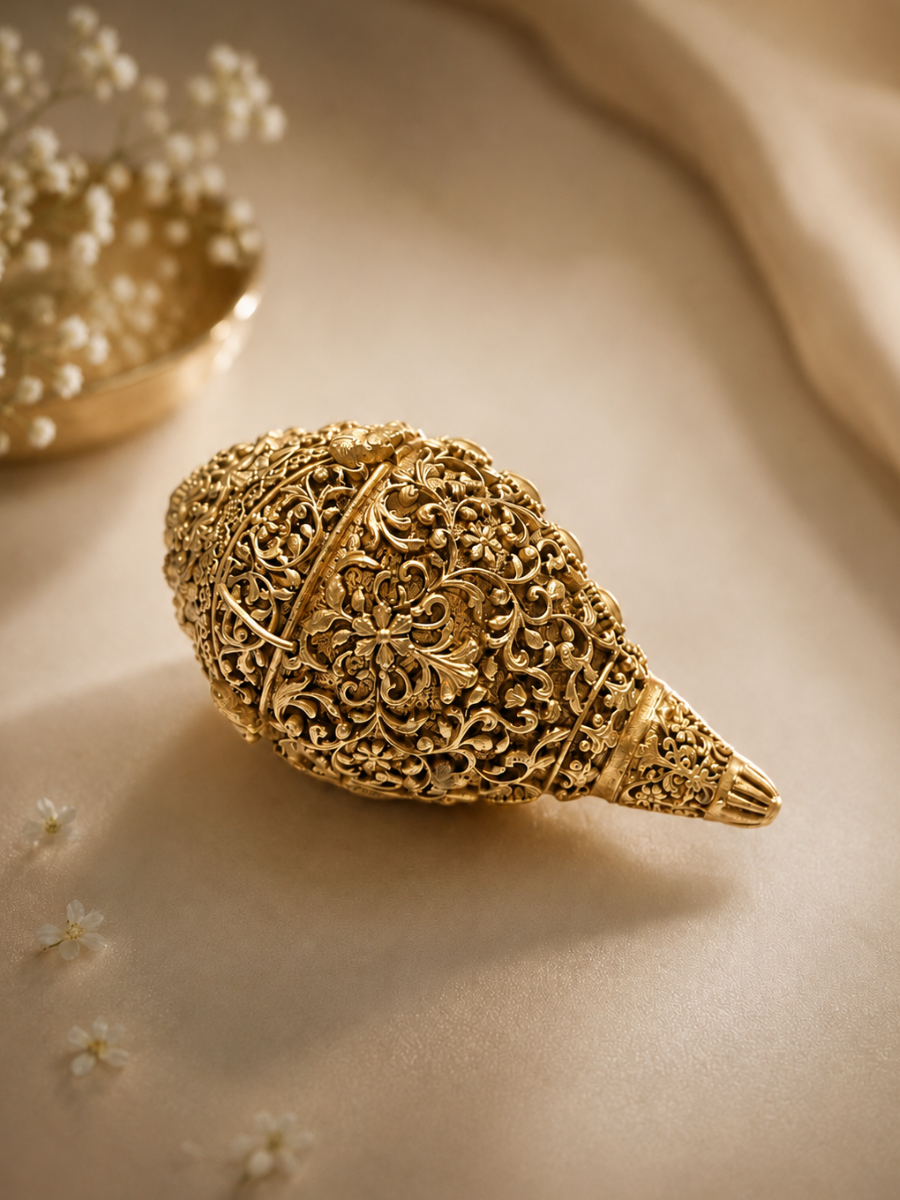
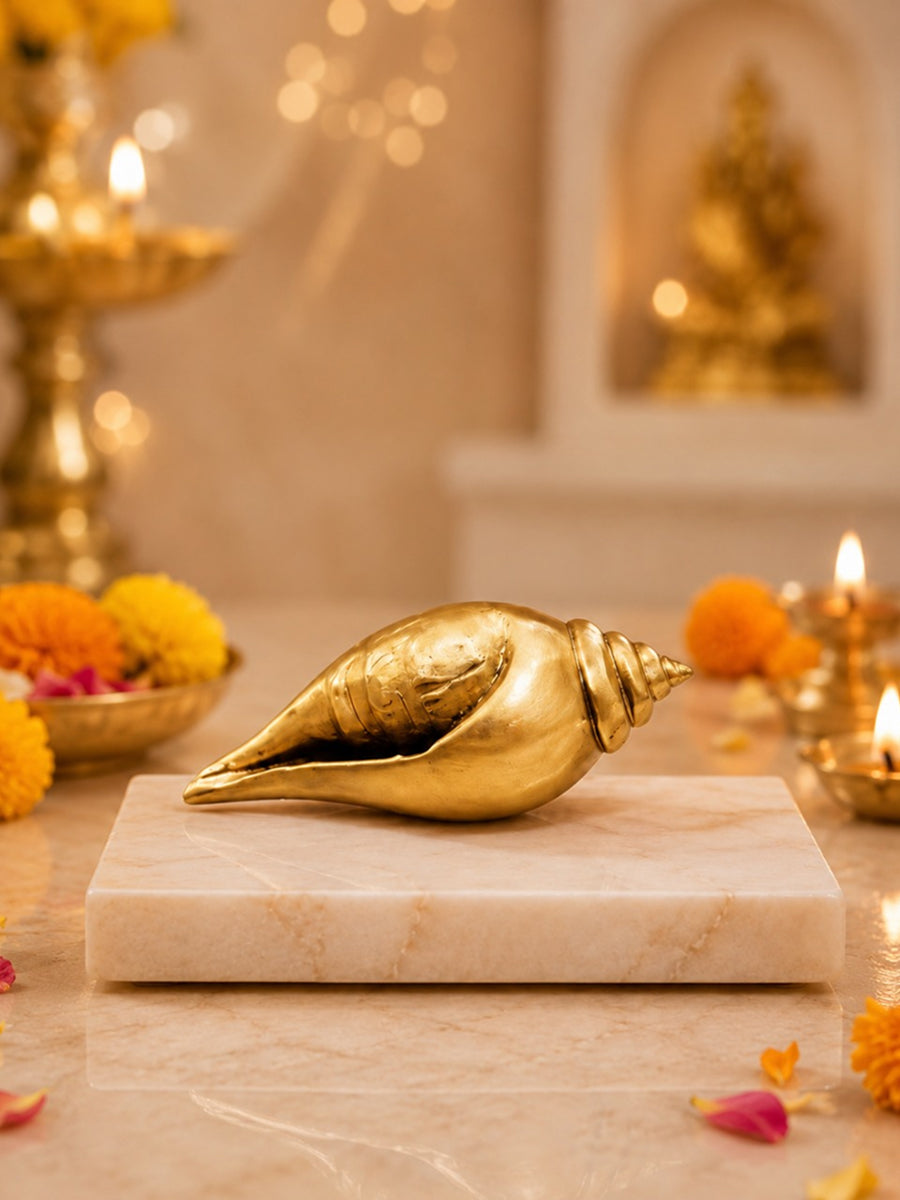
Brass Shankh for Pooja — Antique Conch Shells for the Home Temple
A shankh, or conch shell, is one of the most sacred objects in Hindu worship, blown to mark the start of a pooja and to clear the air of negativity. Prime Gesture's brass shankhs are hand-cast by skilled artisans, finished in a warm antique tone, and made to hold their sound and shine for years. Each piece is made for the home temple, daily pooja, and gifting, and is built to last for generations.
This collection holds brass shankhs in both decorative and blowing forms, from an antique shankh for the altar to a dakshinavarti shankh brass piece kept for prosperity. Every shankh is solid brass, not plated or hollow, and develops a richer antique patina the longer it is kept. Browse the collection below, or shop shankh online and filter by size and price to find the right conch for your pooja.
Why Is the Shankh Important in Pooja?
The shankh holds deep meaning in Hindu tradition. It is one of the four attributes held by Lord Vishnu, and its sound is believed to be the primordial sound of creation, Om. Blowing the shankh at the start of a pooja is thought to purify the air, clear negative energy, and invite auspicious vibrations into the home.
A shankh for pooja serves two roles. A blowing shankh is sounded during aarti and at the start of worship, while a decorative or dakshinavarti shankh is placed on the altar as a sacred object of prosperity. Both carry the same spiritual significance, and many homes keep one of each.
What Makes a Brass Shankh the Right Choice?
Brass is an excellent material for a shankh. A brass shankh is durable, holds its shape and sound over time, and does not chip or crack the way a natural shell can. It also carries a warm, sacred presence on the altar that suits the home temple.
A brass shankh also lasts. It develops a warm antique patina over the years, growing more beautiful rather than dulling. Unlike a natural conch shell that can fade or become brittle, a brass conch shell for pooja stays a lasting part of the home temple, passed from one generation to the next.
Every shankh in this collection is cast in solid brass, hand-finished, and given an antique tone that suits both traditional and modern pooja spaces.
What Types of Shankh Are Available?
This collection covers the main shankh types devotees look for:
- Blowing shankh — a functional conch that can be sounded during aarti and at the start of pooja, with an opening shaped for clear sound.
- Dakshinavarti shankh — the rare right-turning conch, considered especially auspicious and linked to Lakshmi and prosperity, offered here in a lasting brass form.
- Decorative altar shankh — a shankh kept on the altar as a sacred object, often ornately detailed, for homes that want the symbol without a blowing function.
- Shankh on a stand — a shankh paired with a base or stand, for display on the pooja shelf or console.
The blowing shankh suits daily worship, while the dakshinavarti shankh brass piece is kept mainly for prosperity and auspicious energy. Many homes keep both.
Where Should You Place a Shankh in the Home Temple?
Place the shankh in the home temple or pooja room, ideally in the north-east, the most sacred direction in Vastu. A dakshinavarti shankh is often kept in the wealth corner or near the Lakshmi idol, as it is linked to prosperity. Keep the shankh raised on a clean platform or a small stand, never directly on the floor.
A few guidelines help maintain the shankh correctly:
- Keep the shankh on a clean cloth or stand in the pooja area, raised off the floor.
- Point the open mouth of a dakshinavarti shankh upward or toward the deity, as tradition holds.
- Do not keep two blowing shankhs used for worship touching each other; keep them separately.
- Clean the shankh gently and keep the area around it tidy and respected.
A shankh for home temple completes the pooja setup alongside the diya, bell, and deity idols.
How Do You Use a Shankh in Daily Worship?
A blowing shankh for pooja is sounded at the start of worship and during aarti. It is held with both hands and blown in a single steady breath, producing a deep, resonant sound believed to purify the space and mark the sacred moment. The sound is traditionally sounded three times.
A dakshinavarti or decorative shankh is not blown but worshipped as a sacred object. Some devotees fill it with water and use it to sprinkle sanctified water during pooja, or keep it beside the Lakshmi idol for prosperity. Both uses are traditional, and a brass shankh serves either purpose while lasting far longer than a natural shell.
Is a Shankh a Good Gift?
A brass shankh is a meaningful and auspicious gift, carrying wishes of purity, prosperity, and divine blessing. It suits housewarmings, weddings, Diwali, and as a gift for anyone setting up a new home temple. A dakshinavarti shankh gift is especially valued, as it is linked to Lakshmi and wealth.
Present the shankh respectfully, ideally with both hands, in auspicious wrapping. Because it is solid brass, it lasts for decades as a sacred part of the recipient's pooja. A shankh gift is welcomed in almost any Hindu home and is remembered long after the occasion.
Why Buy Your Shankh From Prime Gesture?
Prime Gesture is a homegrown Indian brand dedicated to handcrafted brass and silver-plated devotional pieces. Five things set our shankh collection apart:
- Solid brass, made in India — every shankh is hand-cast by skilled artisans, never plated or hollow.
- Functional and decorative options — blowing shankhs shaped for clear sound, and decorative dakshinavarti pieces for the altar.
- Antique finish — a warm tone that suits any pooja space and ages beautifully with worship.
- Safe pan-India delivery — brass pieces reach you damage-free in reinforced packaging, with free shipping and cash on delivery.
- Built to last generations — a brass shankh outlasts a natural shell and stays a lasting part of the home temple.
Browse the shankh collection above and choose the conch that fits your pooja and your home.
Explore Related Collections
Complete your pooja setup with these related Prime Gesture collections:
- Pooja Bells — brass ghantis that pair with the shankh at the start of worship.
- Lakshmi Idol — Goddess Lakshmi, beside whom a dakshinavarti shankh is often kept.
- Vishnu / Balaji — Lord Vishnu, who holds the shankh as one of his four attributes.
- Brass Chowki — raised platforms for the pooja altar.
- Brass Collection — the complete Prime Gesture brass catalogue.